Monday, March 18, 2024
Crossing Paths: Coincidence or Divine Intervention?
Wednesday, June 14, 2023
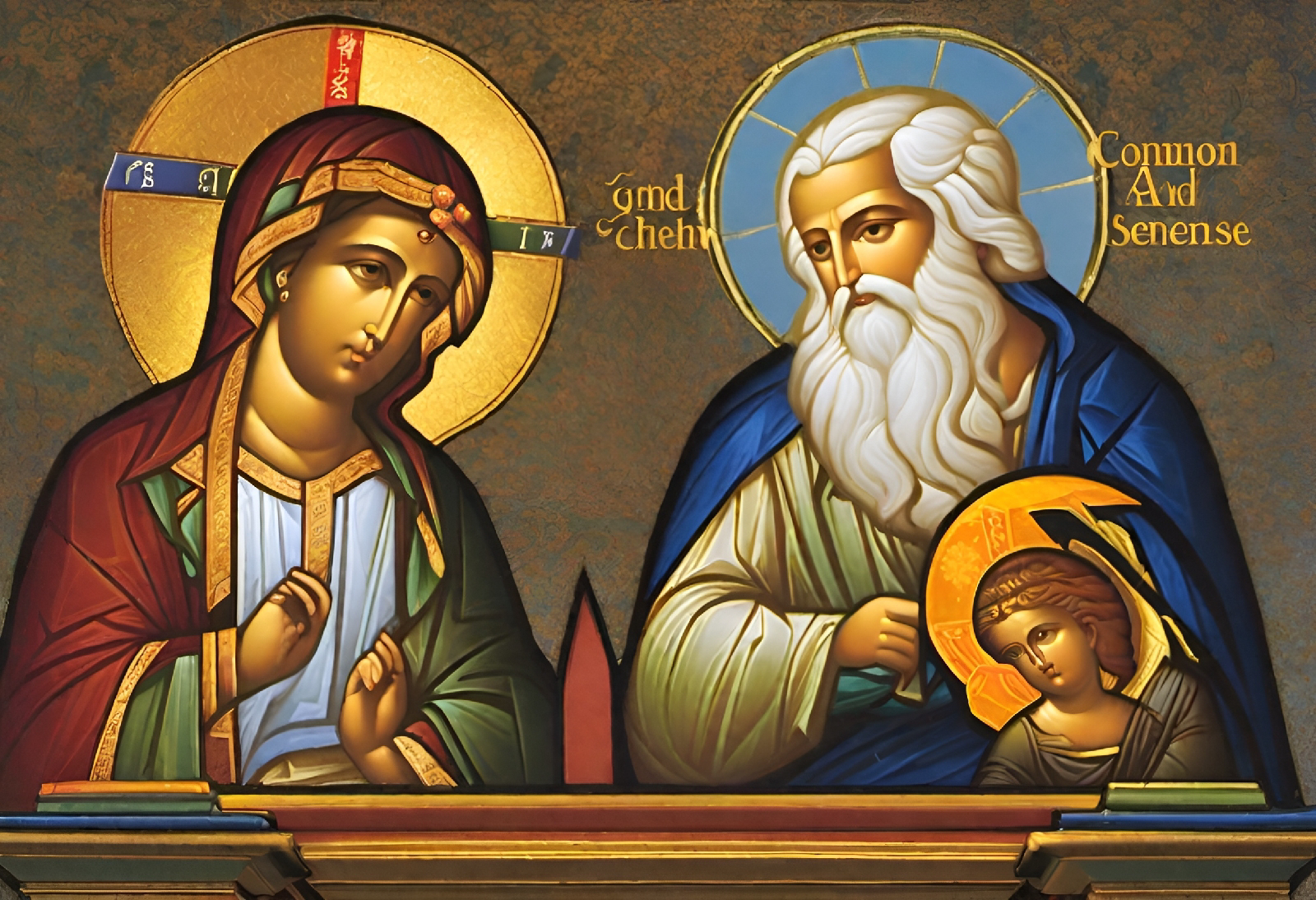
God Does Not Have Common Sense: A Dive into the Divine Mind Through Isaiah.
To claim that God lacks common sense might seem like an audacious proposition, even heretical. Yet, as we delve into the enigmatic realm of the divine, particularly through the lens of the Book of Isaiah, a fascinating paradox emerges. While God's wisdom and power are undeniable, attributing to him a human-like cognitive faculty like "common sense" might be a dangerous oversimplification.
Isaiah, a prophet known for his bold pronouncements and poetic imagery, throws us into the heart of this paradox. He paints a picture of a God whose actions and pronouncements defy our earthly understanding. In one breath, he promises lush harvests and prosperity, and in the next, threatens utter destruction for disobedience. He speaks through dreams and visions, employs metaphors and hyperbole, and acts through seemingly illogical means.
Take, for instance, the famous prophecy of Isaiah 7:14. "Therefore the Lord himself will give you a sign: Behold, the virgin shall conceive and bear a son, and shall call his name Immanuel." This seemingly absurd pronouncement, defying the very laws of nature, challenges our human comprehension. Yet, for Isaiah and the Israelites, it served as a powerful symbol of God's intervention and ultimate control over history.
Herein lies the crux of the matter: God's perspective transcends our finite understanding. What we perceive as illogical or contradictory might be, from his perspective, part of a grander, incomprehensible plan. His actions, though seemingly lacking in "common sense," are guided by a wisdom that encompasses the entirety of time and existence, a wisdom beyond our grasp.
Furthermore, Isaiah reveals a God who is not bound by the same constraints as humans. He is not subject to the limitations of time, space, or even logic. He can act in ways that appear nonsensical to us because he operates on a different plane, guided by a purpose that surpasses our immediate understanding.
This, however, is not to say that God is devoid of logic or reason altogether. The Book of Isaiah is filled with pronouncements that display a profound understanding of human nature, history, and the workings of the world. However, his logic is not our logic, and his reasoning is not confined to the narrow parameters of human "common sense."
To understand God, then, we must abandon the quest for earthly analogies and embrace the mystery. We must move beyond the limitations of our human minds and accept that the divine operates according to a different set of rules, a different kind of logic.
This is not to say that we should abandon all critical thinking or suspend our moral compass. Rather, it is a call for humility, for acknowledging the vastness and complexity of the divine mind. It is a reminder that our understanding of God is always partial, always evolving, and that ultimately, we are but humble travelers on a journey towards a mystery that can never be fully grasped.
Therefore, let us approach the Book of Isaiah, and the divine itself, with a sense of awe and wonder, open to the possibility that God's ways are not our ways, and that his thoughts are far above our thoughts. Let us embrace the paradox, the uncertainty, and the mystery, for in grappling with these very things, we might just catch a glimpse of the divine mind, a mind that, while lacking in "common sense," is infinitely more vast, more complex, and more awe-inspiring than we could ever imagine.
Monday, December 13, 2021
Beyond Common Sense: Unveiling the Divine through Isaiah's Lens.
Tuesday, January 8, 2019
Beyond Human Logic: God, Common Sense, and the Book of Isaiah.
Thursday, November 3, 2016
My Nigeria Online (MyNOL): Free training for YALI Network members
Friday, October 28, 2016
YiPS call young members to join the conversation Online !
The Internet Governance Forum (IGF) is a multistakeholder space that facilitates the discussion and dialogue of public policy issues pertaining to the Internet. The IGF was convened in 2005 by the United Nations General Assembly.
With the renewal of its mandate by United Nations in December 2015, the IGF consolidates itself as a platform to bring people together from various stakeholder groups as equals. While there’s no negotiated outcome, the IGF informs and inspires those with policy-making power in both the public and private sectors. At their annual meeting delegates discuss, exchange information and share good practices with each other.
The IGF facilitates a common understanding of how to maximize Internet opportunities and address risks and challenges that arise. The IGF is also a space that gives developing countries the same opportunity as wealthier nations to engage in the debate on Internet governance and to facilitate their participation in existing institutions and arrangements. Ultimately, the involvement of all stakeholders, from developed as well as developing countries, is necessary for the future development of the Internet.
To register, click here...
https://www.intgovforum.org/multilingual/content/igf-2016-online-participant-registration
Thursday, October 10, 2013
Why I pay my Tithe!
The concept of tithe (giving a tenth of one's income) is present in the Bible, but its importance and interpretation differ somewhat between the Old and New Testaments.
In the Old Testament, tithe was a mandatory practice for Israelites (Leviticus 27:30, Malachi 3:8-10). It served as a way to support the Levites (priestly tribe) who didn't own land and to maintain the Temple (Exodus 30:11-16, Numbers 18:21).
In the New Testament, Jesus doesn't directly address tithing, but emphasizes generosity and giving from the heart (Matthew 6:19-21). He commends the widow who gave her entire offering, though it was a small amount (Mark 12:41-44).
Nowhere in the Bible does it say paying tithe guarantees entry to heaven. Both the Old and New Testaments emphasize faith and good works as the path to salvation (Ephesians 2:8-9, James 2:14-26).
We must understand that Tithing was a significant practice in the Old Testament for supporting the religious community.
The New Testament emphasizes generosity and giving based on one's heart. Salvation comes through faith and good works, not solely through financial offerings.
While the specific practice of tithing may not be explicitly mandated for Christians today, the spirit of giving remains important. Many Christians choose to donate a portion of their income to their church or charities they support. Ultimately, the amount and type of giving should be a personal decision made with prayer and reflection.
According to Proverbs 3:9-10: "Honor the Lord with your wealth, with the first fruits of all your crops; then your barns will be filled to overflowing, and your vats will brim over with new wine."
Your intent must be clear. For 2 Corinthians 9:7: says,"Each man should give what he has decided in his heart to give, not reluctantly or under compulsion, for God loves a cheerful giver."
Remember, the most important aspect is to give with a joyful heart and a desire to support your community or a cause you believe in. In my fold, it's a must to show responsible leadership.
Bro. Adebunmi Akinbo | A prophet and an Apostle.